[lwptoc]
Introduction
There is a coming tsunami of baby boomers who may need care in the coming years. Many caregivers are confused and anxious about the available care solutions for their elders.
Are nursing homes the best choice for your loved ones?
Can older adults care for themselves?
How can an elderly live in a home independently for as long as possible?
What are the legal issues involved in providing care to seniors?
This post will explore the solutions to care for the elderly. After reading it, you will have the answers about senior home care, assisted living, hospice, and other adult care options.
Chapter 1 What It Means to Be a Caregiver
If you are a middle age woman, you likely have provided care to a senior in the family.
Caregiving is a demanding job that can cause physical injury and mental stress.
You must take care of yourself to take of others.
Image by StockSnap from Pixabay
1. Caregiver Snapshot
A caregiver is a person who provides care and support to another person in need.
Caregivers often play an essential role in helping people with chronic illnesses, disabilities, or mental health conditions manage their condition and live as independently as possible.
In the US, about 44 million adults provide unpaid assistance and support to seniors and disabled people who live in the community.

Image by ❄️ Julita ❄️ from Pixabay
Some interesting facts about caregivers in the US:
♦ Women are twice as men in number.
♦ Most are 35-64 years old, married, or with a partner.
♦ 83% are relatives of the person they are caring for.
♦ About half of caregivers live with or near the person they are caring for.
♦ About half of caregivers have full-time jobs.
♦ The amount of weekly care varies from fewer to more than 40 hours.
♦ The average length of caregiving is about 4.3 years.
2. Caregiver Self-care: Physical Injury
Caregivers often help their loved ones with activities of daily living, such as bathing, dressing, and eating.
As a caregiver, you are at an increased risk for physical injuries. Examples of risk are:
- Awkward postures or repetitive tasks, like lifting, transferring, and repositioning patients.
- Risk of illness or infection from exposure to blood or body fluids, or in close contact with infected individuals or in confined areas.
- Risk of injury from sharp knives or other potentially hazardous tools.
- Exposure to chemicals in household cleaning products.
- Burn injuries from ovens, deep fryers, and steam from pots.
- Slips, trips, and falls.

Image by Darwin Laganzon from Pixabay
These tips can help caregivers prevent physical injuries:
- Learn the potential hazards of your workplace and related activities.
- Pay attention to your body mechanics when lifting and moving patients.
- Frequent hand washing reduces infections.
- Moisturizers and other precautions can keep your skin from drying and prevent dermatitis.
- Always use protective equipment, such as gloves and shoes with non-skid soles.
- Keep emergency contact numbers in a handy place.
3. Caregiver Self-care: Caregiver Burnout
When you are constantly in a state of emotional, mental, and physical exhaustion, it is easy to get burnout from the demands of caregiving.
You may have the following symptoms:
- Withdrawal from friends and family.
- Loss of interest in activities previously enjoyed.
- Changes in appetite, weight, or both.
- Emotional and physical exhaustion.
- Getting cold or flu more often.
- Feeling hopeless and helpless.
- Increasingly impatient and irritable.
- Desire to hurt yourself or the person in care.

It’s normal to feel overwhelmed or stressed when you’re a caregiver. However, you can take some measures to prevent caregiver burnout:
- Don’t try to do everything yourself. Ask for help from family and friends.
- Take care of yourself physically and emotionally. Get regular exercise, eat a healthy diet, and get enough sleep.
- Make time for activities that you enjoy outside of caregiving.
- Join a support group or connect with other caregivers online or in person.
- You need to see mental health professionals if you are feeling persistent sadness, anxiety, or hopelessness.
Other resources are also available to relieve yourself from stress:
Home health services – They provide visits by health aides and nurses to promote independence, health, and wellness to clients at home.
Adult daycare – These programs enable seniors to socialize and enjoy activities in a group setting. Some also offer other health services, like physiotherapy and occupational therapy.
Nursing homes or assisted living facilities – These facilities may provide respite care.
Private care aides — These professionals can help with bathing, dressing, and other activities of daily living at client’s homes.
Caregiver support services — Support groups and other programs can help caregivers exchange information and ideas and support each other.
Other government agencies and organizations can be great resources for caregivers too.
Chapter 2 Legal and Ethical Issues a Caregiver May Face
Chapter 1 What It Means to Be a Caregiver
Laboring under an assumption is never a good thing.
Before caregiving starts, responsibilities, payments, expenses, etc., should be ironed out.
What are estate planning, POA, MPOA, and DNR?
Let’s dive in.
Image by PublicDomainPictures from Pixabay
1. Talk About Important Issues Early On
Once a person reaches the point of needing help with daily living, caregivers come into play.
Most likely, caregivers are family members.
Because caregiving is a demanding task, caregivers should discuss these issues among themselves to have a better understanding:
- Expectations for caregiving.
- Your feelings about caregiving.
- Your roles in the caregiving process and the impact on your life.
- How caregiving will fit into your future plans.
- Challenges you’re facing as a caregiver.

Image by OpenClipart-Vectors from Pixabay
The following assessment can also determine your ability to deliver care:
♦ How is your employment or financial status?
♦ What is the relationship between you and the person receiving care?
♦ Are you living in the same household?
♦ Are you married? Have children? How many people live in your home?
♦ Can other family members or friends help with care?
♦ Are you working? Full-time or part-time?
♦ What is your household income?
♦ How would you rate the quality of family relationships?
The goal here is to establish a realistic plan for caring for your loved ones.
2. Ask for Legal Advice
Caregivers may face many legal issues when caring for a senior loved one.
For example:
A power of attorney (POA) can sometimes cause friction among family members.
Seeking guardianship can lead to a lengthy and expensive court battle.
And an unfortunate caregiver can be accused of abuse by the person in care or other family members.
So before entering into a caring relationship, it is crucial to seek guidance from a knowledgeable source, such as an attorney specializing in elder law.

Image by Gerd Altmann from Pixabay
A good lawyer will also advise you on many areas of the care relationship.
The rights of the person being cared for
Caregivers need to be aware of the rights of the person they are caring for, including the right to privacy, dignity, and the right to receive proper medical care.
The rights of the caregiver
Caregivers also have rights, including the right to be treated with respect, the right to fair compensation, and the right to a safe working environment.
The duties of the caregiver
Caregivers have several duties, including the duty to provide care professionally and competently, the duty to follow the instructions of the person being cared for, and the duty to keep the person safe.
The liability of the caregiver
Caregivers can be held liable for their actions or for the actions of those they are caring for. This means they can be sued or held criminally responsible if they do something wrong.
3. Keep Agreement in Writing
Caregiving involves complex relationship dynamics among family members or between the caregiver and care recipient.
All parties involved should reach an agreement in advance to help resolve care issues that would arise in time.

Image by No-longer-here from Pixaba
Some suggestions are:
- A written agreement outlining your roles and responsibilities.
- This agreement should be reviewed and updated regularly.
- A backup plan for when you can’t continue caregiving.
- A plan for what will happen when the person you care for passes away.
- A plan in place in case of your own illness or injury.
Put all these in writing so there is no confusion.
The agreement usually includes the following terms:
4. Care Agreement
What is a care agreement?
A care agreement is a contract used to hire someone to provide care services for a disabled or aging adult. The caregiver can be a friend, a family member, or a professional healthcare worker.
The agreement is used to compensate the caregiver for their time and services. It should be in writing, and the compensation should be reasonable.

Image by Mohamed Hassan from Pixabay
The agreement usually includes the following terms:
- A description of the services to be provided.
- How often they will be provided.
- How much the caregiver will be paid.
- How long the agreement is in effect.
Why is it essential to have a care agreement?
It provides clarity and understanding for the caregiver and the person being cared for. It can help prevent misunderstandings and conflict.
How can I create a care agreement?
You can create a care agreement by yourself or with the help of a lawyer, social worker, or other professional.
5. Estate Planning
Regarding estate planning, there are a few key things to remember.
First, start the conversation early.
It can be challenging to raise the subject of estate planning and preparing for “end of life” matters.

However, having an open dialogue with your senior loved ones is crucial, especially at a time they are still healthy and able to make their own decisions.
Second, be prepared to pay for long-term care.
Have the plan to cover the costs of various care options. They include home care, assisted living, nursing homes, and continuing care retirement communities.
Finally, estate planning also organizes financial and legal affairs so that assets are distributed according to your loved one’s wishes when they die.
It can be a difficult conversation to have. Still, starting early, being patient, and bringing in an experienced professional to help are essential.
6. Expenses and Payment
As a caregiver, you may find yourself in the position of having to manage the finances for someone else.
This can be a difficult task, as it requires a delicate balance.
You have to respect the wishes of the person you care for while ensuring that their finances are managed in a way that is best for their future.
With this goal in mind, here are some agreement samples to help manage money issues:
- The care recipient is responsible for all medical and care expenses.
- The caregiver is responsible for all other costs related to caregiving (transportation, food, etc.).
- The caregiver will be reimbursed for out-of-pocket costs (home modification, insurance, incontinence products, etc.).
- The caregiver will be paid for their time and effort at an hourly rate.
- The caregiver and the person being cared for will agree on a payment schedule.
- The caregiver will keep records of all expenses and time spent caregiving.
- The care recipient will have the right to audit the caregiver’s records.

Again, it is always a good practice to put all agreements in writing.
7. General Power of Attorney (POA)
A general power of attorney is a document that assigns someone as your decision-maker. It can include financial, medical, or legal decisions.
Why is it essential to have a general power of attorney?
A general power of attorney can be a valuable tool in managing your affairs if you lose your ability to decide for yourself. It can also delegate authority to someone else to handle your matters in your absence.
Before granting someone a general power of attorney, you should consider the following:
- The person’s ability to make sound decisions
- The person’s understanding of your wishes
- The person’s ability to follow through on their commitments
- The person’s relationship with you
- The person’s motivation for wanting to be your agent
- The person’s other commitments and obligations
- The potential for abuse of the power
*Talk to a legal professional for legal advice.
8. Medical Power of Attorney (MPOA)
A medical power of attorney is a document that assigns someone to make medical decisions on your behalf. It helps manage your medical care when you lose the capacity to decide for yourself.
People most often designate a family member or close friend as their MPOA.
You should consider these things before granting someone medical power of attorney:
- The person’s understanding of your wishes
- The person’s ability to follow through on their commitments
- The person’s relationship with you
What will happen if you do not have a medical power of attorney?
In the case of you become incapacitated, yet with no MPOA, you may be left with two options:
1. Living will. A living will only take effect when you become permanently incapacitated. If you fall into a coma due to treatable bacteria meningitis, the living will doesn’t help.
2. Your loved ones make decisions according to your wish. Again, without prior discussion or agreement, your loved ones may not clearly understand your wishes, or there may be value conflicts between them.
So it is easy to see the importance of having an MPOA in advance.
*Please talk to a legal professional for legal advice.
9. Do Not Resuscitate (DNR)
A DNR order is a legal document that states you do not want to be brought back to life if your heart or breathing stops.

This is usually done at the request of a chronically ill patient who wants to die on their own terms.
CPR procedures include:
- Chest compression.
- Intubation (opens the airway via a tube through the mouth or nose).
- Cardioversion (corrects abnormal heart rhythms).
- IV medications make the heart beat (epinephrine, amiodarone, vasopressin, and atropine sulfate).
While CPR saves lives, it can be dangerous and lead to physical injuries, brain damage, or even death.
The survival rate for CPR varies widely depending on the age and health of the patient. In the worst scenario, older adults with cancer may only have 1 – 6% surviving rate after CPR procedures.
So, talking to your doctor about CPR risks and benefits is crucial. Combined with the quality of life consideration, you can make an informed decision for your final destination.
Typically, DNR orders must be written by a doctor, signed by a doctor, and include the patient’s name and date. Your doctor may discuss the details with you before admitting you into a hospital, nursing home, or hospice program.
You can update the DNR order whenever you change your mind.
If you have a DNR order, keep it on hand and make sure paramedics are aware of it if they arrive. You can also wear medical jewelry that alerts others of your DNR status.
10. Disposition of Final Remains
A disposition of the final remains document is an essential part of any estate plan.
It’s a way to show your loved ones how much you care about them by making your wishes known when you’re no longer there to tell them.

This document allows you to decide what to do with your physical body after death and any ceremonial aspects. You can also designate one or multiple adults to assume responsibility for your wishes.
Remember that your wishes may change over time, and that’s OK because the disposition of final remains is revocable.
11. Last Will and Testament
Most people do not like to think about death, especially their own. However, it is vital to be prepared in case of an unexpected death.
One way to do this is to create a last will and testament (or simply a will or last will).

A will is a legal document specifying what will happen to a person’s belongings and estate after death. It can also include instructions for the person’s funeral and burial preferences.
Without a will, surviving relatives may fight over the deceased’s belongings.
Creating a will is not difficult, and many resources are available to help. You can usually find “fill-in-the-blank” forms online or through certain law firms.
A valid will must be written in the person’s own handwriting, signed, and dated. Also, it has to be properly witnessed.
Preparing a will can relieve stress for the person creating the will and their surviving relatives.
*Please talk to a legal professional for legal advice.
Chapter 3 Daily Care Activities and Solutions
A person’s care always goes from easy to more taxing.
Typical home caring tasks are meal preparation, housekeeping, medication administration, and transferring.
It takes dedication to learn, improve, and master the art of caregiving.
Image by Michael Schwarzenberger from Pixabay
1. Care Levels Increase Over Time
The amount and type of care the elderly need will vary depending on their circumstances.
As people age, they often require more help with activities of daily living, such as bathing, dressing, and eating. They may also need assistance with transportation, medication management, and other health-related tasks.
The care needed will increase as a person’s physical and cognitive abilities decline. For example:
Social isolation increases the risk of mental decline in older adults.
Cognitive impairments like Alzheimer’s disease or dementia, Parkinson’s disease, depression, or other mental illnesses may cause:
- Changes in behavior that require assistance from a professional caregiver.
- Increased risk for wandering off.
Therefore, around-the-clock supervision is often needed as the condition progresses.
There are a variety of care options available for the elderly, including:
- In-home care
- Adult daycare
- Assisted Living
- Nursing homes
The type of care that is best for an individual will depend on their specific needs and preferences.
2. Most Common Care Tasks
The following are typical tasks of daily living older adults may need assistance with:
- Bathing
- Dressing
- Eating
- Toileting
- Transferring (getting in and out of bed or a chair)
- Continence care
- Medication management
- Transportation
- Housekeeping
- Companionship
- Assistance with other health-related tasks (like ostomy, catheter care, etc.)
3. Preparing and Serving Meals
Caregivers can help the elderly living at home tremendously by preparing and serving meals to them:
- Planning and preparing meals that are nutritious and meet the dietary needs of the elderly person
- Cooking meals according to the instructions of the elderly person or their caregiver
- Serving meals to the elderly person and providing assistance as needed
- Cleaning up after meals

Image by Oberholster Venita from Pixabay
Caregivers can also assist with feeding the elderly if they cannot do so themselves. This may involve:
- Cutting up food.
- Spoon-feeding.
- Providing liquid nutrition through a straw.
Dehydration is a common problem for the elderly, so caregivers should take extra precautions to ensure they drink plenty of fluids.
4. Giving Medication
There are a few things to consider when giving medications to elderly people.
First, make sure that the person takes their medication as prescribed by their doctor. This means giving them the correct dosage at the right time and ensuring they do not skip any doses.
Second, monitor the person’s response to the medication:
- Observing for any changes in their behavior or mood.
- Checking their vital signs (e.g., blood pressure, heart rate, etc.) regularly.
- Reporting any changes that concern you to the doctor right away.
Finally, keep track of all the medications the person is taking.
This includes over-the-counter drugs and supplements, as well as prescription medications.
The information can be helpful in an emergency or if there are any adverse reactions to a particular medication.
5. Transferring the Elderly
There are a few things to consider when transferring elderly people with dementia.
First, make sure that the person can be transferred safely. Use proper lifting techniques and ensure that the person is not in pain during the transfer.
Second, make sure that the person is comfortable during the transfer. Dress the person properly and have enough pillows or blankets to support their body.
Finally, ensure that the person’s head and neck are supported during the transfer. This can help prevent them from getting injured if they fall during the transfer.
Device to use when transferring an elderly person with dementia
A few different devices can be used when transferring an elderly person with dementia.
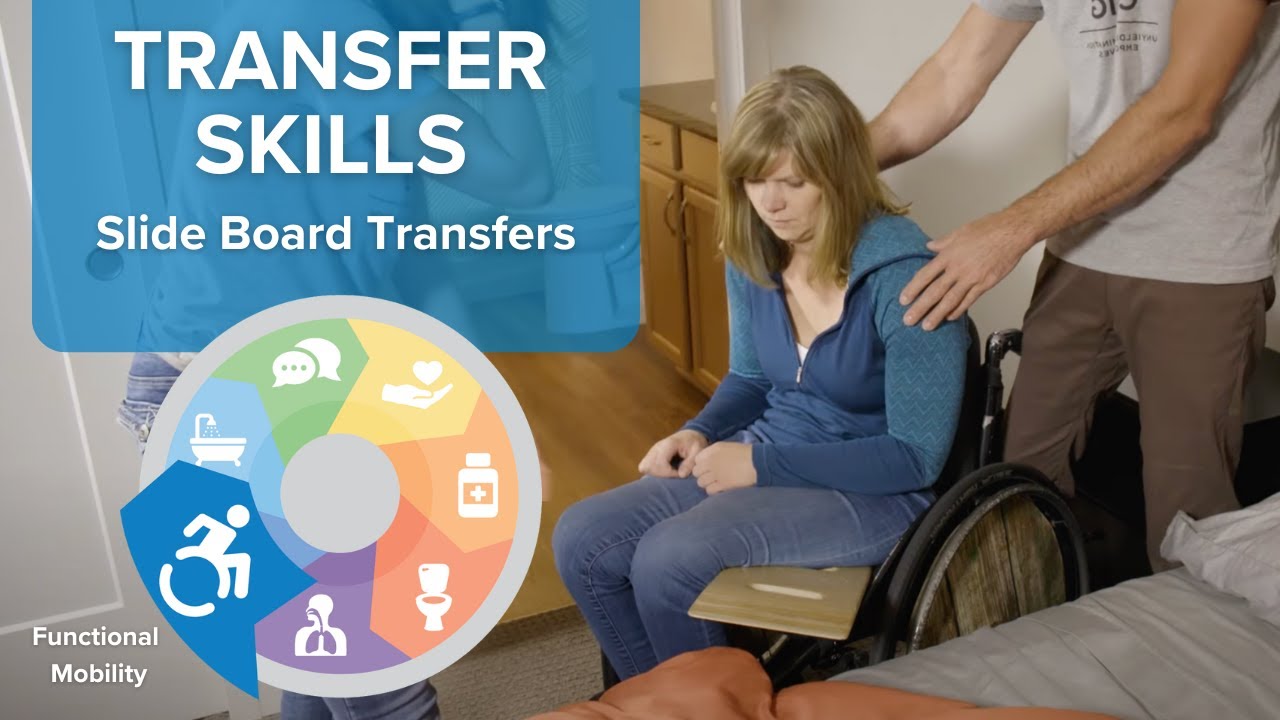
Transfer boards can be placed under the person’s body to help slide them from one surface to another.
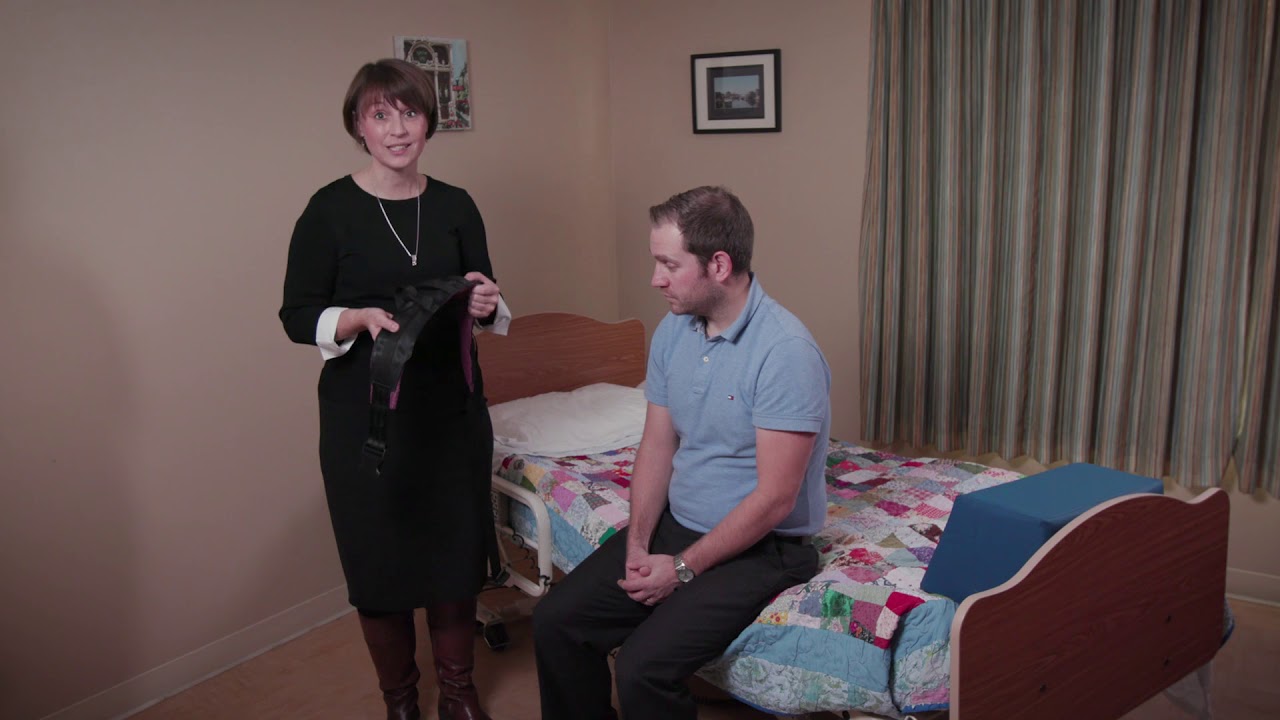
Transfer belts can be wrapped around the person’s waist to support
Mechanical lifts use hydraulics to lift a person up and down. These lifts make it easy to transfer the person from their bed to a wheelchair or from a wheelchair to a car

6. Maintaining a Clean and Tidy Environment
Keeping a senior’s living area clean and tidy is essential for their health.
Caregivers may have a busy schedule, but cleaning should be done in ways sensitive to the senior’s needs:
- Offer choices: Do they want it daily or three times a week?
- Encourage independence: If senior wants to help, they should be encouraged.
- Respect privacy: Ask for permission before entering a senior’s bedroom or bathroom.
- Maintain individuality and dignity: Set time and routine according to the senior’s wishes and preferences.
The goal of cleaning is to create a safe and convenient environment so that:
- Living areas are clean and free of clutter, which helps prevent the person from becoming agitated or anxious.
- People can easily access their personal belongings, clothes, toiletries, etc.
- The person’s quarters are safe and free of tripping hazards, sharp objects, or poisonous chemicals.
7. Choosing Appropriate Clothes and Keeping Laundry Safe
When choosing clothes for an elderly needing help with daily activities, it is wise to pick ones that are:
- Comfortable and easy to put on (less frustration).
- Not too tight or too loose (less tripping or falling).
- Not irritating their skin (fewer sores or rashes).
- Adaptive clothing (open-back shirts or elastic pants, so easier to change when soiled)
Confusion is common among older adults, especially the ones with a cognitive impairment like dementia. It could lead to poisoning due to ingestion of laundry chemicals or skin burns due to exposure to cleaning agents.

Image by Gerd Altmann from Pixabay
These are simple measures that prevent accidental exposure to laundry products:
- Keep laundry packets or powder in secure containers.
- Store laundry packets or powder out of sight and reach.
- Keep bleach and other laundry detergents out of sight and reach.
8. Exploring Transportation Options
Older adults may have difficulty getting around and need help from others. Transportation can become one of the most significant responsibilities for a caregiver.
Luckily, there are many options for transportation, including:
- Public transit.
- Paratransit or demand response (Dial-a-Ride, HandyDart).
- Taxis.
- Ride-hailing (Lyft, Uber).
- Non-emergency medical transportation.
- Volunteer programs.
You can find out what is available in your area by asking your social worker, case manager, or transportation company.

When considering a transportation option, ask about the following:
- Availability – what are the hours or days of service?
- Eligibility requirements – are there any age, disability, and income requirements?
- Scheduling – how to book?
- Service area and trip type – are there any limitations on the geographic area or purpose of the trip?
- Accommodation and assistance – is there any help when picking up or dropping off?
- Are wheelchairs or walkers OK?
- Cost and payment methods – do they offer any discounts or government subsidies for seniors?
- Driver credentials – are there any training or background checks for the drivers?
9. Monitoring Emotional Wellbeing of the Elderly
The elderly are often more susceptible to emotional difficulties due to several factors, including declining health, social isolation, and bereavement.
As a carer, it is crucial to be aware of the signs that an elderly person may be struggling emotionally so that you can provide support and assistance.

Signs that an elderly person may be struggling emotionally are:
- Withdrawing from social activities or isolating themselves from others
- Expressing feelings of sadness, loneliness, or hopelessness
- Losing interest in activities that they used to enjoy
- Experiencing changes in appetite or sleep patterns
- Exhibiting signs of anxiety or depression
Chapter 4 Common Challenges and Solutions
Caregiving is more than just completing specific care tasks.
It involves dynamics of individual values, cultural differences, conflicts with the health system, and emotional distress.
Each piece of the puzzle needs solutions.
Let’s find out together!
1. Diversity and Cultural Difference
If you have elderly family members or friends, you must be sensitive to their needs and feelings.
Many older people are reluctant to burden their loved ones with their care and may not want to discuss the subject. If you broach the topic, be sure to do so in a respectful and considerate manner.
Also, be aware of the cultural differences in caring for the elderly.
In some cultures, talking about death or aging is considered disrespectful. In others, it’s perfectly normal to discuss these things openly. Be sure to research the customs of your loved one’s culture before bringing up any sensitive topics.

No matter what your personal opinion is on caring for the elderly, keep in mind that everyone is different. What works for one person may not work for another.
The most important thing is to respect your loved one’s wishes and needs and provide them with the best possible care.
2. Problems with Healthcare Personnel
Suppose you are unfortunate enough to require hospitalization or any other type of medical care. You may meet some misinformed and even incompetent healthcare personnel.
One example is a doctor who tells a patient they are too old for a specific treatment when the treatment would be just fine for them.
Another example is a nurse who does not know how to properly take care of an IV line, and as a result, the patient ends up with an infection.

There are many others, but these two should suffice to illustrate the point – not all healthcare personnel are created equal.
Some are genuinely dedicated to their profession and providing quality care, while a few seem more interested in meeting quotas or making money.
If you find yourself in the care of someone who seems incompetent or uncaring, do not hesitate to speak up.
On rare occasions, even competent healthcare personnel can make mistakes.
If you believe you have been the victim of medical malpractice, you should speak to a lawyer as soon as possible.
3. Problems of Denial
Denial is one of the most challenging things to deal with when caring for elderly family members.
Many older people refuse to accept that they are getting older and need help. They may be in denial about their declining health or not want to burden their loved ones with their care.
Denial is a natural part of the aging process. Many seniors feel like they are losing control of their lives and may see admitting that they need help as a sign of weakness.

Image by ❄️♡????♡❄️ Julita ❄️♡????♡❄️ from Pixabay
It’s essential to be patient and understanding and to try to work through the denial with your loved one.
In some cases, getting help from outside sources may be necessary. If your loved one is in danger of harming themselves or others, you may need professional help.
In other cases, you may need to consider placing your loved one in a nursing home or assisted living facility.
On the other hand, you may have your denial.
Many caregivers find it difficult to accept that their parents or spouses are getting older and may need more help than they currently receive.
If you find yourself in this situation, seek support from other family members or friends.
Talking about your feelings can help you work through the denial and provide the best care for your loved one.
4. Difficulties in Managing Time
It isn’t easy to estimate how much time it will take to complete caring tasks.
Many caregivers underestimate the time for simple tasks, such as bathing or dressing a loved one. As a result, they may find themselves rushed and stressed out. So, more mistakes are being made, which can lead to even more stress.

Image by Gerd Altmann from Pixabay
Take note that every person is different and that it may take longer to complete specific tasks with some people than with others.
Sometimes, your loved one may have physical or mental limitations that make giving care harder.
If unsure how long a task will take, it’s always better to overestimate rather than underestimate. This way, you can avoid much stress or anxiety.
5. What Happens When Caregiving Is Over
One of the most challenging things to deal with when caring for elderly family members is that the caregiving will end one day.
Many caregivers feel lost and alone when their loved ones pass away or move into long-term care facilities. They often have feelings of purposelessness and depression.

This is a natural part of life, and there is no shame in seeking support from other family members or friends.
Think about what your interests are and pursue them after the caregiving ends. This will help you find a purpose and avoid feeling lost and alone.
6. Coping With Emotional Distress
Caring for elderly family members can cause emotional distress.
Many caregivers find themselves feeling overwhelmed, stressed, and anxious. This can lead to physical and mental health problems like insomnia, headaches, and depression.
Taking care of yourself both physically and emotionally is a great coping strategy:
- Eating a healthy diet.
- Exercising regularly.
- Getting enough sleep.
- Spending time with friends and family.
Finding ways to relax and de-stress is essential, such as reading, listening to music, or spending time in nature.

Image by Will Eames from Pixabay
If you struggle to cope with caregiving stress, seek help from a professional.
Many counselors and therapists specialize in helping caregivers deal with the emotional toll of their job. Talking to someone who understands what you are going through can give you much-needed relief.
Chapter 5 Essential Equipment and Supplies
Thanks to the innovations in the past few decades, many pieces of equipment are available to make caregiving much more manageable.
They range from walkers and power scooters to adjustable power beds.
Your loved ones can enjoy a comfortable cleaning with shower chairs and bath benches!
Image by Emerson Albuquerque from Pixabay
** The following sections feature several affiliate links, meaning we’ll earn a small commission if you purchase through these links.
1. Electric Recliners
Electric recliners help you get up and down by yourself. Some are programmable into positions for the best comfort and pain relief.

When looking for electric recliners, ensure they have a few specific features.
- Easy to get in and out of.
- Comfortable seat and backrest.
- Wide range of positions so that the user can find the most comfortable one.
- Easy to use control panel so the user can adjust the settings as needed.
2. Walkers and Rollators
Seniors may have trouble walking and need assistance getting around. The two main types of walking aides are walkers and rollators.
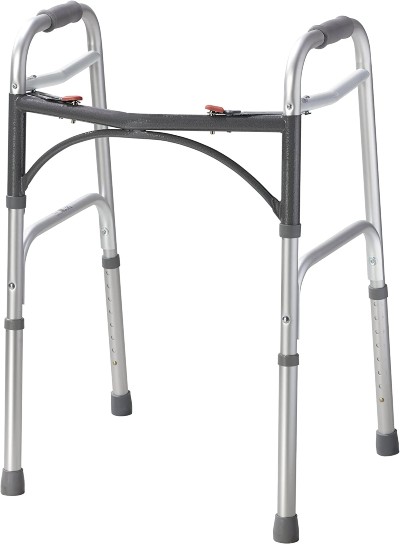
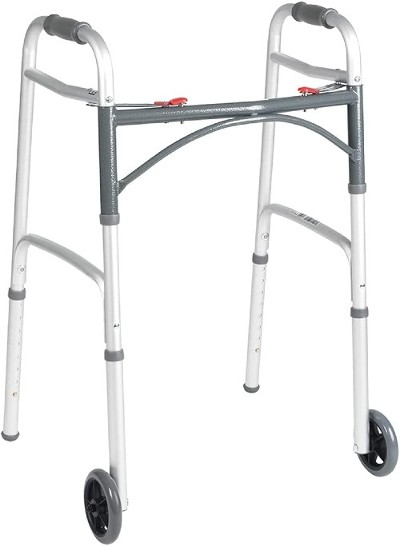
Walkers come without wheels or with two wheels on the front and two legs. They are inexpensive and typically for short-term and in-home use.
Rollators have wheels on all legs, with seats attached for the user to rest. They are for long-term use and are popular outdoors.
Standard walkers
- Most basic type
- Best for short distances travel
- Best for stability
- Foldable for easy storage
Two-wheel walkers
- Casters on the front two legs – easier for mobility
- Rubber tips on the rear legs – prevent the walker from rolling
Three-wheel rollators
- One swiveling wheel in the front
- Easy to maneuver
- Good for indoor use
- Lighter and more portable
- No seat
- Less stability
Four-wheel rollators
- Two swiveling wheels in the front
- Come with a seat(15”)
- More support and stability
- Has storage basket
Heavy-duty rollators (bariatric rollators)
- Wider seats (19”)
- Reinforced steel frames
- Higher weight capacity(400 – 500 lb)
- Larger wheels



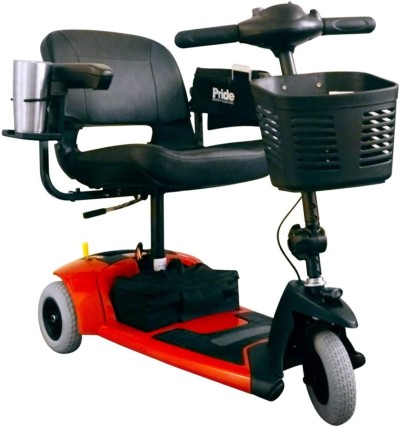
3. Power Scooters
Power Scooters for seniors can be an excellent option for those who have trouble getting around.
These scooters can help seniors move around their homes and even go shopping. There are three mobility scooters: travel/portable, three-wheel, and four-wheel.
Travel mobility scooters (portable scooters)
- Compact, foldable, and can be disassembled.
- Fit into the trunk of a car or as airplane cargo.
- Lighter than full-sized scooters.
- Seats are smaller and have less padding.
Three-wheel mobility scooters
- Easier to turn
- Less stable than four-wheel scooters
- Suitable for use in places with even surfaces, like homes or shopping malls
- Not safe for uneven surfaces, like sidewalks

Four-wheel mobility scooters
- Large wheels and better suspension systems
More stable - Well suited for outdoors (even with rough terrain or hills)
Heavy-duty scooters
- More powerful motor
- Wider and sturdier base
- Higher ground clearance
- Larger tires
- Higher weight capacities(500-550 lb)


All-terrain scooters
- Heavy-duty scooter
- For activities with rugged surfaces (trails, grass, mud, and sand)
4. Shower Chairs and Bath Benches
Shower Chairs for seniors are also called bath chairs, shower seats, or bath benches. They are designed to provide a comfortable and safe place for people with difficulty standing in the shower or getting into the tub.
The options depend on whether you have a shower or a bath.
Shower chairs are designed for showers, and bath benches are for bathtubs.
The Best Shower Chairs for Seniors
Non-padded shower chairs – lightweight and convenient to use; usually have holes for drainage.
Padded shower chairs – extra paddings offer much more comfort.
Bariatric shower chairs – broader base and more robust frame; support weights between 400 – 500 lbs.
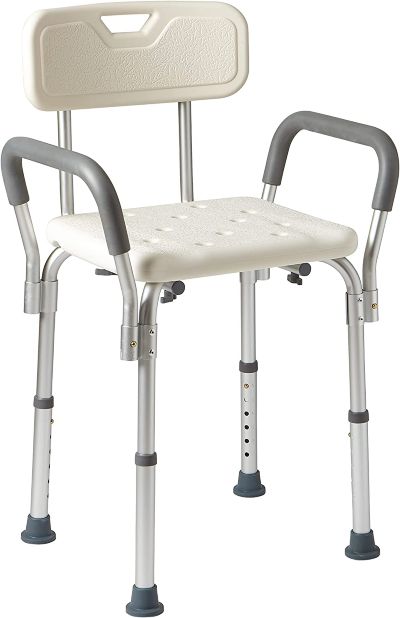


Other options may combine shower chairs, commodes, and add-on features for more versatile usage.
The Best Bath Benches for Seniors
Traditional bath bench – fits into bathtubs; provides sturdy support.
Sliding bath bench – makes it easier to transfer in and out of the bathtub.
Bath lift – lifts yourself in and out of the bathtub.
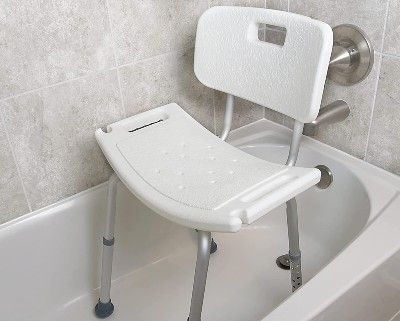


If you’re looking for additional features, check out shower chair and commode combos.
Other bath aides
Handheld shower spray – more manageable and more comfortable shower.
Long-handled bath sponge – more convenient for cleaning hard-to-reach areas.


Bath or shower mat – prevent slips and falls.
Grab bar and handrails – secure handle to hold on to while getting in/out of bath/shower.



5. Commode Toilet Chairs
A variety of commodes (portable toilets) are designed specifically for seniors.
These chairs typically have a higher seat and backrest to make it easier for seniors to sit down and stand up. Some also have armrests and handles to help with balance.
What is the purpose of a commode chair?
A commode chair is a small, portable toilet used by people who have difficulty using a regular toilet. They are often used by seniors or people with disabilities.
How to choose one?
Before purchasing a bedside commode, there are many things to consider, such as stability features, height and width, weight capacity, and material.
Rubber-tipped feet or locking casters, handrails, and droppable armrests are excellent stability features.
Bedside commode seat height ranges from 17 inches to 28 inches, widths from 13 inches to 31 inches, and depths range from 14 inches to 23 inches. Height adjustable legs give your more flexibility when placing it over the toilet.
A standard bedside commode can accommodate users weights up to 300 pounds and bariatric models up to 1,000 pounds.
Bedside commode frames come in aluminum, stainless steel, or healthcare-grade PVC to meet different user needs.


It is essential to research your options and make an informed purchase. Stores usually do not allow refunds for hygiene products.
6. Power Adjustable Beds
An adjustable bed is a bed that can be raised or lowered in the head or foot area. Power adjustable beds come with a built-in motor that allows the user to adjust the bed to its desired position.
These beds are gaining popularity with people of all ages, particularly seniors.
Adjustable beds can help with back and body pains, improving digestion, circulation, and easing swelling throughout the body.
They can also make it easier to get in and out of bed for those with mobility concerns.
How to choose one
There are a few things to consider when choosing a power-adjustable bed for seniors or those with disabilities.
- A size that will fit the room and be comfortable for the user.
- The motor is powerful yet quiet.
- Memory foam mattresses are often recommended for power-adjustable beds as they provide support and comfort.

7. Carts and Tables
Carts and tables for seniors are available in various sizes, shapes, and colors. They come with different features to suit the needs of individuals as well.
Some carts have wheels so they can be easily moved around, while others have legs to be placed on any surface.
The carts and tables for seniors can be used for diverse purposes, such as eating, drinking, reading, writing, or even playing games. They can store things like books, magazines, or other items too.
When choosing carts and tables for seniors, it is essential to consider the individual’s needs.
For instance, if the senior is a wheelchair user, a cart with wheels would be ideal. A table with legs would be better if the person cannot move around easily.
Some of the features include:
- Wheels – allow the cart or table to be easily moved around.
- Legs – provide support and stability.
- Storage – Some carts and tables come with storage shelves or drawers.
- Adjustable height – allows the cart or table to be used by people of different heights.
- Folding – Some carts and tables can be folded to take up less space when not in use.


8. Cameras, Monitors, and Alarms
Many seniors have difficulty getting around their homes and may not be able to see or hear someone coming in.
Cameras, monitors, and alarms can help them feel safer by allowing them to see who is at the door without getting up. These devices can also alert them if someone comes into their home unexpectedly.
Motion sensor lights
Motion sensor lights can also help seniors feel safer in their homes.
These lights will turn on automatically when someone is near, making it easier for seniors to see who is around them and deterring criminals from approaching their homes.

Home security system
A home security system can provide an extra layer of protection for seniors.
These systems can be programmed to call the police or a family member if there is an intruder, and they can also monitor activities inside the home.

Medical alert system
A medical alert system can be a lifesaver for seniors.
These systems are worn around the neck or wrist and can be used to call for help if the wearer falls or has a medical emergency. The fall detection feature utilizes accelerometers that detect falling motion and sends alert to monitoring centers.

These are just a few ways seniors can stay safe in their homes. By taking some simple precautions, they can help to ensure their safety and peace of mind.
9. Emergency Alert Buttons and Systems
Many types of alert buttons and systems can be used to help improve the safety of seniors.
Some of these include:
Emergency call buttons can be worn as a pendant or bracelet. Seniors can use them to contact emergency services if needed immediately.
GPS tracking devices that can be worn or carried by the senior, allowing their location to be tracked in case they become lost or wander off.
Personal alarms that make a loud noise when activated. These devices can scare off an attacker or attract attention if the senior is in trouble.



Chapter 6 Outside Resources Are Available
At the later stage of caregiving, sometimes it is not feasible to take care of the elderly all by yourself.
Many health professionals and care facilities can give you much-needed relief.
Helps are available, even to the very end of the caregiving journey.
1. Assisted Living Facilities
An assisted living facility is a type of housing designed for people who need assistance with activities of daily living.
These facilities provide care and support services to help residents live independently.
Services may include help with meals, bathing, dressing, toileting, and medications. Most assisted living facilities also offer social and recreational activities.

Image by Rosy – The world is worth thousands of pictures from Pixabay
How to choose one
When choosing an assisted living facility, it is crucial to consider the level of care and support your loved one needs.
Some facilities offer more comprehensive services than others. The cost of care and whether your loved one’s insurance plan covers the facility are factors to consider.
Be sure to visit the facility and meet with the staff before deciding. It will allow you to see the facility and get a feel for its level of care and support.
2. Churches and Related Organizations
Organizations such as the Salvation Army and Catholic Charities offer various services for the elderly, including housing, meals, transportation, and social activities.
Many churches also have programs specifically for seniors. Contact your local church or religious organization to learn more about what might be available in your community.

Image by Rosy – The world is worth thousands of pictures from Pixabay
Community centers may offer recreational programs for seniors.
Local health departments may offer older adults free health education and care services.
Domestic violence shelters and programs offer protection for vulnerable children and adults (men, women, LGBT)
Food pantries and soup kitchens supply nutritious meals for low-income families/individuals. These services mainly benefit people who are homeless or unemployed.
Some hospitals and clinics offer free or low-cost medical care. It can include dental, vision, mental health services, and other types of specialty care.
Legal aid organizations provide free legal assistance to low-income individuals and families who cannot afford an attorney.
3. Nursing Homes
A nursing home is a facility that provides skilled nursing care and rehabilitation services for people who are unable to live independently.
Nursing homes offer various services, including 24-hour medical care, meals, laundry and housekeeping services, and social activities.
Residents typically stay in private or semi-private rooms and can access common living rooms, dining rooms, and outdoor spaces.

Image by Moondance from Pixabay
Nursing homes are regulated by state and federal laws that set standards for the quality of care they must provide. All nursing homes must have a license from the state where they operate.
The majority of nursing home residents are older adults. However, some younger people with chronic illnesses or disabilities also reside in these facilities.
Most nursing home residents require help with activities of daily living such as bathing, dressing, eating, and using the restroom. Many also need help with medication management and other health-related tasks.
Licensed nurses, certified nursing assistants, and other health professionals generally staff nursing homes.
Nursing home care costs vary depending on the location, type of facility, and level of care required. There are both private pay and government-funded facilities.
When choosing a nursing home, it is essential to tour the facility and meet with staff members to get a sense of the environment and level of care that will be provided.
4. Adult Day Care Providers
Adult daycare providers provide daytime care and supervision for adults who may need assistance with daily activities.
These services can benefit seniors who live alone or have difficulty caring for themselves and adults with disabilities or chronic health conditions.
Adult daycare providers typically offer a variety of activities and social events to keep participants engaged and promote their overall well-being.

Image by Moondance from Pixabay
Some typical offerings include arts and crafts, games, exercise classes, outings to local attractions, and educational seminars.
Many adult day care centers also provide transportation to and from the facility so participants can quickly get there and back.
5. In Home Assistance and Care Providers
In-home assistance and care providers are individuals or organizations that provide care and assistance to people in their homes.
This can include help with activities of daily living, such as bathing, dressing, and eating; homemaking tasks, such as cooking, cleaning, and laundry; and personal care services, such as grooming and toileting.

Image by Rosy – The world is worth thousands of pictures from Pixabay
The provider can be family members, friends, paid caregivers, or professional service providers.
The type and amount of assistance and care provided will vary depending on the needs of the individual.
Some people only need help with a few tasks, while others require more comprehensive support.
6. Hospice
A hospice is a type of care that provides comfort and support to terminally ill people.
Hospice care can be provided in various settings, including hospitals, nursing homes, and patient homes.
The hospice care team typically includes doctors, nurses, social workers, chaplains, and volunteers.
Hospice care aims to help patients live comfortably while supporting their families. Hospice care typically includes pain management and emotional and spiritual support.

Image by subin cho from Pixabay
How to choose a hospice?
Things to consider when choosing a hospice:
- The needs of both the patient and their family.
- The location of the hospice.
- The type of services offered.
- The cost and payment.
- The experience of the hospice team and whether they can provide the level of care needed.
7. Funeral Homes and Related Service Providers
A funeral home, also known as a funeral parlor or mortuary, is a business that provides interment and funeral services.
These services include providing a place for the body to be viewed, embalming and cremation, and coordinating with cemetery services. Funeral homes also typically offer pre-planning services for funerals.

Image by Johana Peña from Pixabay
The first funeral homes in the United States were established in the early 19th century.
At that time, most people died at home and were buried in family cemeteries. As cities began to grow, more people died away from home, making it difficult for families to transport bodies back home for burial. Funeral homes provided a solution by storing bodies until they could be transported or buried.
Today, funeral homes are vital in helping people cope with death.
They provide various services to help ease the process of planning a funeral, including transportation of the body, paperwork assistance, and grief counseling.
Chapter 7 Help You and Help Me
Feeling lonely and exhausted after a long day of caregiving?
Have tips and pieces of advice for other caregivers?
Join a support group!
Image by Oleg Gamulinskiy from Pixabay
There are many ways that caregivers can help others.
1. Join a support group for caregivers. You can find emotional support and practical advice from other caregivers facing similar challenges.
2. Connect with other caregivers online and share tips and advice.
3. Volunteer your time to organizations that provide services to caregivers or the elderly. It can be a great way to give back and make a difference in the lives of those who need it most.
- National Family Caregivers Association
- Alzheimer’s Association
- The Family Caregiver Alliance
- The National Alliance for Caregiving
Conclusion and Final Thoughts
This post explores being a caregiver, legal and ethical issues, everyday caregiving tasks, challenges, and equipment used to provide care.
We also touch on care facilities and outside resources when personal caregivers can no longer meet the demand for care.
If there is anything that I need to include, please comment below!
The audio format of this post



