On a quiet Thursday morning, with my hand trembling around a warm coffee mug, I sat in a sterile hospital room.
Beside me, my father, once a vibrant man, now plagued with memory lapses and confusion, was about to undergo the Mini-Mental Status Exam (MMSE) – a supposed beacon of clarity in our tumultuous journey.
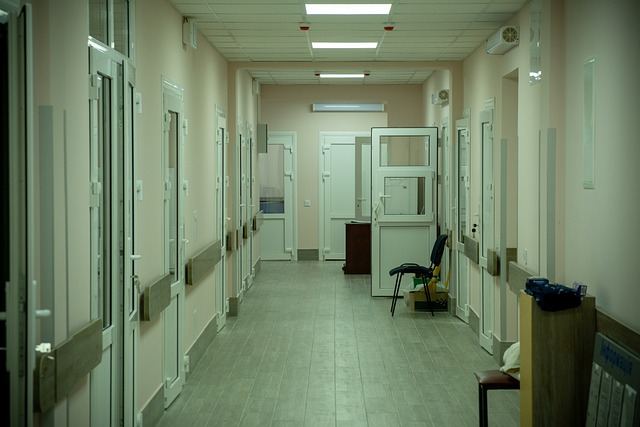
Image by Dmitriy Gutarev from Pixabay
MMSE result seemed oblivious to the qualitative reality
The MMSE is a tool many healthcare professionals utilize when dementia is suspected.
It’s a series of questions and tasks designed to measure cognitive function. Its accessibility and ease of use have made it a primary step in the labyrinth that is dementia diagnosis.
However, I soon discovered that, as a standalone indicator, it can be a masquerading misleader.
My father sat upright, his worn-out eyes searching for familiarity in this alien environment. As the medical practitioner began the test, I saw my father struggle with some questions, yet easily answer others.
Twenty minutes later, a score was scribbled on the clipboard. 24 out of 30 – a result interpreted as “normal cognitive function.”
The result, a quantitative measure, seemed oblivious to the qualitative reality we were living.
My father’s confusion with everyday tasks, his forgotten conversations, the frustration in his eyes – these were glaring signs that his mental state was far from ‘normal’.
Yet, the MMSE didn’t account for these real-life situations, leaving us perplexed and drowning in a sea of unanswered questions.
MMSE lacks the nuance necessary to diagnose complex or mild dementia
Through the eyes of many healthcare professionals, the MMSE is a convenient, efficient tool. It can detect severe cognitive impairment with relative accuracy.
However, it lacks the nuance necessary to diagnose more complex or milder forms of dementia. It doesn’t delve into the depth of a person’s confusion, their struggle with daily tasks, or their declining ability to communicate effectively.
All these overlooked factors can play a crucial role in the early detection and treatment of dementia.
More frustratingly, the MMSE results don’t provide enough information for an accurate diagnosis or effective treatment plan. A high score may not rule out dementia, nor does a low score confirm it.
It also can’t identify the specific type of dementia, leaving the person and their loved ones grappling with uncertainty and fear.
Comprehensive dementia diagnosis involves more than just MMSE
Initially, I found myself caught in a tumult of emotions, confronting what seemed to be an oversimplified approach to such a profound condition. It was baffling that the MMSE, a basic 30-point questionnaire, could be the sole indicator of dementia.
Determined to understand more, I dove into research and engaged with various health practitioners, from mental health nurses to geriatricians.
I came to realize that a meticulous dementia diagnosis is multifaceted, integrating not just the MMSE but also medical history, physical examinations, laboratory tests, and in-depth observations of behavioral changes.
And then, something unexpected happened. In a rare moment of clarity, my father mused, “Perhaps the issue isn’t simply about forgetting, but being inundated with so many memories over a lifetime. Maybe my mind is trying to find a balance, even if it’s losing the battle.”
His words deeply moved me. I began to see dementia not just as a relentless thief but as an overwhelmed librarian, struggling to manage an ever-expanding collection of memories, even if, eventually, most are misplaced.
A dementia diagnosis is not the end of the road
Our journey in the world of dementia diagnosis was filled with contradictions. The MMSE, a primary diagnostic tool, was both a guiding star and a misleading illusion.
We found hope not in a test result, but in a fresh perspective that came from the person we least expected – the patient himself.
The narrative of a dementia diagnosis is far more complex than a simple test. It’s a puzzle where the MMSE is just a single piece.
The others? They are concealed in the stories of the individuals living with the condition, the observant eyes of their loved ones, and in the hands of caring, discerning professionals willing to look beyond the standard measures.
We are still navigating this labyrinth but do so with renewed hope and a deeper understanding.
An understanding that dementia diagnosis goes beyond a score on a test; it requires a nuanced, comprehensive approach that considers the uniqueness of each individual’s experience.
A dementia diagnosis is not the end of the road but a twist in our journey.
With each passing day, we are learning to appreciate the unexpected turns and detours that lead us not to a dead-end, but to new vistas of understanding and compassion.


