Whispers of an unexpected event echoed in the air as Tom’s morning cup of coffee trembled in his hand.
His vision blurred as the room around him seemed to twist into a disorienting carousel.
And then, just as suddenly as it had started, it stopped.
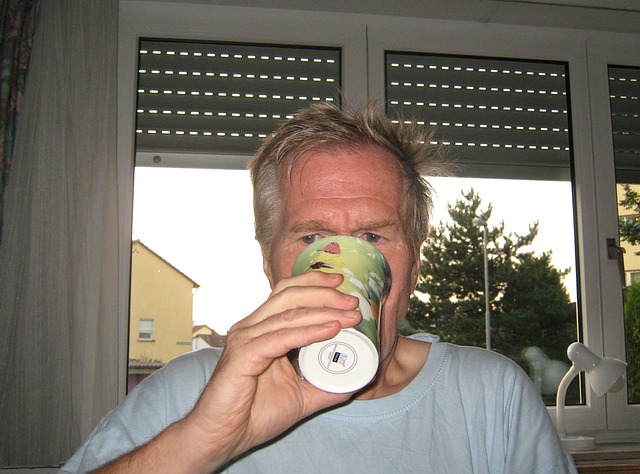
Image by Gerd Altmann from Pixabay
Like a storm that quickly blows over
In the morning stillness, Tom felt a sudden jolt of unease.
His coffee mug quivered in his hand, the dark liquid rippling in tandem with a strange sensation prickling his nerves. A quick, sharp headache made him wince, the pain abruptly punctuating the quiet hum of the morning.
Then, he noticed a weakness creeping up his right side, making his arm feel unusually heavy.
His surroundings seemed to sway, the room taking on the likeness of a spinning top while his vision blurred at the edges.
All of this happened within minutes before receding, like a storm that quickly blows over, leaving him disoriented in its wake.
A misconception that spiraled into a crisis
What Tom just went through was a Transient Ischemic Attack (TIA), a condition often dismissed as a mini-stroke.
Characterized by temporary disruptions in the blood supply to parts of the brain, a TIA manifests as sudden and brief episodes of symptoms similar to an actual stroke.
This includes the onset of a severe headache, dizziness, visual impairment, and physical weakness or numbness, typically on one side of the body.
Many perceive such instances as simple bouts of exhaustion or temporary dizzy spells, mere anomalies in an otherwise routine day.
However, the truth is far from such simple deductions.
These episodes are not mere stones creating ripples in the pond of health but can be the harbinger of a looming health catastrophe – a major stroke or vascular dementia.
The cause of a TIA is a temporary decrease in blood supply to part of the brain, often due to a blood clot or debris that reduces blood flow in an artery supplying the brain.
The implications, however, extend beyond the physical manifestations, marking the onset of a potential health crisis.
Ignoring the signs of a TIA is akin to disregarding an alarm bell, which rings to warn of impending danger, only to face a more significant crisis later.
Tom’s journey into the wilderness of his health concerns began with these unheeded signs. Like many, he dismissed the TIA as a momentary blip, an anomaly in an otherwise healthy life.
A misconception that spiraled into a crisis.
One-third of people who experience a TIA go on to have a stroke
Just a few weeks after his initial encounter with a TIA, Tom’s world took a seismic hit – a full-blown stroke.
It was like an earthquake shaking the foundation of his life, his everyday certainties reduced to rubble amidst the convulsions of this devastating health event. Everyday tasks suddenly seemed as monumental as scaling a mountain.
Tom grappled to regain control of his life, which was being relentlessly swept into a whirlwind of medical consultations, tests, and treatments.
Statistics suggest that about one-third of people who experience a TIA go on to have a more severe stroke within a year if preventative measures aren’t taken.
Tom’s case was a stark testament to this grim fact.
Vascular dementia is the second most common type of dementia
His stroke, unfortunately, was followed by a diagnosis of vascular dementia, a condition marking cognitive decline due to reduced blood flow to the brain.
This was a hard blow, pushing him further into the quagmire of health complications.
Vascular dementia is the second most common type of dementia after Alzheimer’s disease, accounting for up to 20% of dementia cases worldwide. The condition can manifest with memory problems, confusion, and difficulties with concentration and communication.
Life for Tom seemed to hang precariously at the edge of a precipice.
The ground he had known, his familiar world, appeared to be slipping away into an abyss. Once filled with simple joys and routines, his world was now peppered with unexpected challenges, akin to navigating an unfamiliar terrain shrouded in dense fog.
His life was irrevocably changed, yet there was still hope, room for action, and potential for change in the face of adversity.
TIAs, stroke, and vascular dementia are interlinked
The dots connected in retrospect. Had he acknowledged the TIAs as alarm bells instead of anomalies, this crisis could have been averted.
The TIAs were not isolated events; they were, in fact, red flags signaling future stroke and vascular dementia.
But from the ruins of his health, Tom found resilience. His grim journey led him to valuable knowledge and a mission to prevent others from walking the path he tread.
Recognizing and responding to TIAs became his mantra, a guiding star in the darkened sky.
Recovery was no spring morning. It was a battle, a struggle against his own body.
But knowledge was his shield, and action his sword. He made changes in his lifestyle, focused on better nutrition, started exercising regularly, and took his prescribed medications diligently.
Tom’s story serves as a cautionary tale, a map to navigate the labyrinth of health complications starting with TIAs. TIAs, stroke, and vascular dementia are interlinked, each leading to the other.
Acknowledging and addressing the signs of a TIA can help prevent the others.
The resolution lies in knowledge, awareness, and action. Listen to the whispers of your body, for they might be signaling something severe.
Do not let TIAs be mere anomalies in your health narrative. Let them be a call to action – a call to prevent stroke and vascular dementia.
Image by Rudolf Langer from Pixabay

Tom’s journey may have started with an unanticipated crisis, but it sparked a beacon of awareness.
TIA is not a passing moment of dizziness. It is a silent alarm for stroke and vascular dementia.
Don’t wait for the stroke to happen. Act at the TIA.
For every moment we take to respond can be a step away from the precipice of a health crisis.


