Imagine this: you’re navigating the golden years of your life, ready to embrace retirement, travel, and cherished moments with family. But an invisible challenge—one no one talks about—shadows your every step.
Urinary incontinence affects 1 in 2 seniors, yet it remains a taboo topic.
And the ripple effect? Staggering healthcare costs, emotional strain on caregivers, and diminished quality of life for millions.
But here’s the good news: things are changing. With new technologies, better healthcare approaches, and growing awareness, we’re transforming how we manage and talk about incontinence.
Let’s dive in!

Prevalence of Urinary Incontinence in Seniors
Urinary incontinence is more common than you think.
It affects nearly 50% of seniors worldwide, with women nearly twice as likely to experience it due to factors like childbirth and menopause.
And in nursing homes? The numbers skyrocket—75% of residents deal with it.
It’s a widespread problem that deserves way more attention.
1. Overall Prevalence
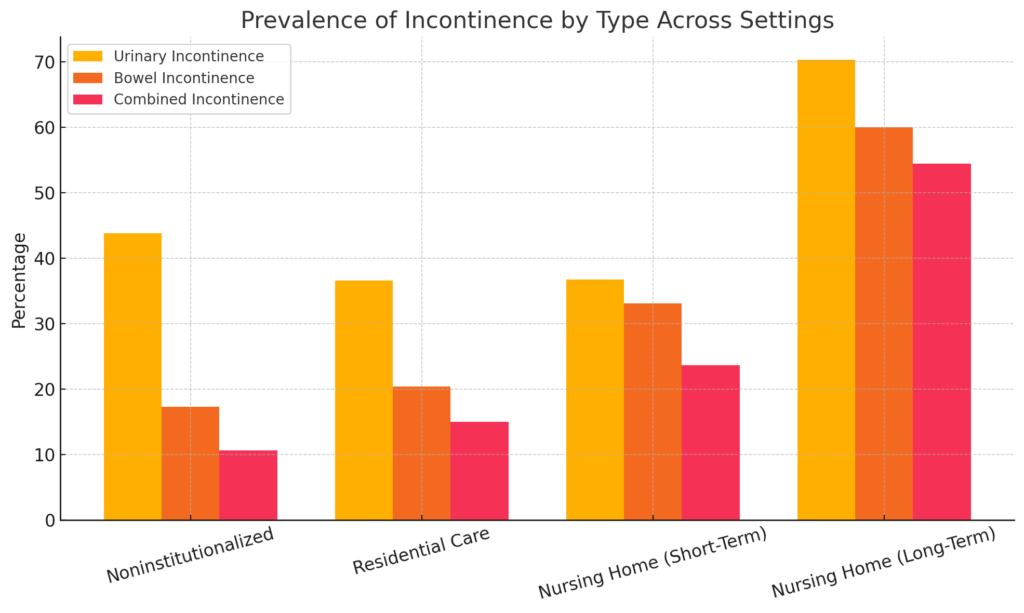
- Noninstitutionalized Population (NHANES 2007-2010):
- 50.9% of older adults (>65 years) reported urinary or bowel incontinence.
- Urinary incontinence was more prevalent (43.8%) than bowel incontinence (17.3%).
- Women were significantly more likely to report urinary leakage than men.
- Residential Care Facilities (NSRCF 2010):
- 39% of residents experienced incontinence in the past 7 days.
- Urinary incontinence was reported by 36.6%, while 20.4% reported bowel incontinence.
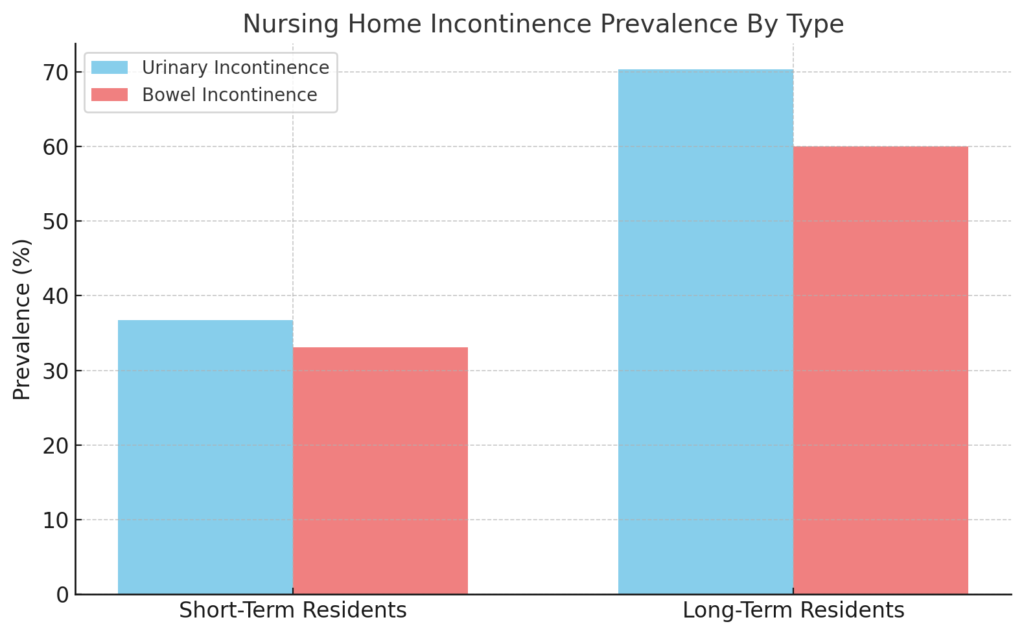
- Nursing Homes (MDS 2009):
- 46.1% of short-term and 75.8% of long-term residents were not fully controlling their bladder or bowel.
2. Gender Differences
- Women consistently reported higher rates of urinary incontinence across all settings.
- The severity of incontinence was more pronounced in women, with significant variations by age group.
3. Trends by Age and Setting
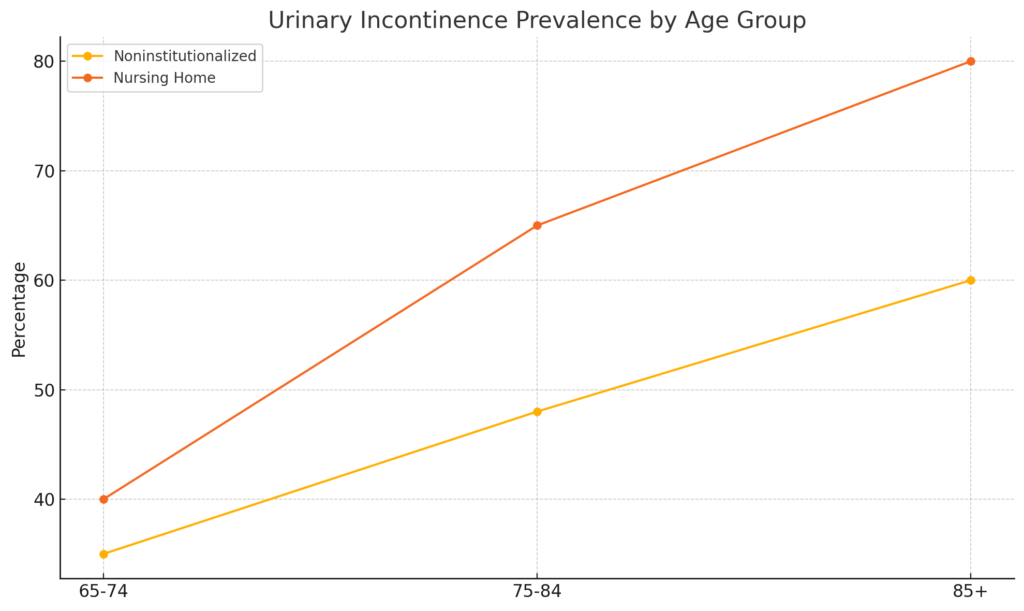
- The prevalence of incontinence increased with age in all settings.
- Among hospice care patients, incontinence rates were 62.1%, reflecting the complexities of managing end-of-life care.
Source: Prevalence of incontinence among older Americans
Complications and Adverse Effects
Urinary incontinence isn’t just an annoyance—it’s a serious health issue. It can lead to UTIs, skin problems, and even falls and fractures.
And it doesn’t stop there.
Many seniors struggle with depression, anxiety, and social isolation because of it.
The result? A huge impact on their quality of life—and on the caregivers and healthcare systems that support them.
1. Physical Challenges
- Urinary Tract Infections (UTIs):
People with urinary incontinence (UI) are much more likely to get UTIs. About 39.2% of incontinent Medicare members had UTIs, compared to only 12.9% of those without incontinence. For those with dual incontinence (both urinary and bowel), the risk is even higher—47.9%. - Skin Issues:
Prolonged wetness can lead to incontinence-associated dermatitis (IAD). It affects 7.7% of incontinent individuals, compared to 4.5% of those without UI. Repeated exposure to moisture worsens the condition. - Falls and Fractures:
UI significantly increases the risk of falls—45.3% of incontinent individuals report falling versus 27.8% of non-incontinent individuals. If both urinary and bowel incontinence are present, the risk jumps to 62.3%. Falls from nighttime bathroom trips or wet surfaces often lead to serious injuries like fractures.
2. Emotional and Mental Struggles
- Behavioral and Cognitive Issues:
People with UI are 2.8 times more likely to experience behavioral problems. For instance, 5.4% of UI patients report such issues, compared to 2.2% of those without UI. - Depression and Anxiety:
UI takes a toll on mental health, causing feelings of isolation and making people withdraw from activities. The stigma surrounding UI often leads to clinical depression and worsens overall emotional well-being.
| Complication | Prevalence in Incontinent (%) | Prevalence in Non-Incontinent (%) |
|---|---|---|
| Urinary Tract Infections | 39.2 | 12.9 |
| Dermatitis | 7.7 | 4.5 |
| Falls | 45.3 | 27.8 |
| Behavioral Disturbances | 5.4 | 2.2 |
Source: The Prevalence of Incontinence and Its Association With…
Economic Impact
Urinary incontinence (UI) among seniors imposes significant economic burdens, encompassing direct and indirect costs.
Below is an overview of these financial impacts, supported by data from reputable sources:
1. Direct Costs
- Incontinence Products: In the U.S., sales of incontinence products are expected to hit $4.33 billion in 2024 and grow to about $5.04 billion by 2029, with a yearly growth rate of 3.08%. (Statista)
- Healthcare Expenses: Treating urinary incontinence (UI) is costly. Globally, the market for UI treatments is projected to grow from $11.61 billion in 2023 to $12.52 billion in 2024, with an annual growth rate of 7.8%. (Research and Markets)
- Medications and Therapies: The market for UI-related medications was worth $4.37 billion in 2023 and is expected to grow at 4% annually through 2030, driven by the increasing number of seniors with UI and better awareness of treatment options. (Research and Markets)
2. Indirect Costs
- Caregiver Burden: When helping seniors manage UI, caregivers often face financial and emotional strain, including lost wages and additional out-of-pocket costs.
- Institutional Care: Seniors with severe UI often require nursing home or assisted living care, driving up healthcare expenses significantly.
3. Global Perspective
- Market Growth: The global market for UI devices, like wearable technology and other aids, is set to grow from over $3 billion in 2023 to around $6.5 billion by 2032, with a yearly growth rate of 8.6%. (Statista)
- Regional Insights: China is a major player in this market, with an expected revenue of $2.17 billion in 2024, the highest globally. (Statista)
These numbers reveal how much UI affects both individuals and healthcare systems. Solving this problem means finding smart solutions to reduce treatment costs and ease the financial strain on families and caregivers.
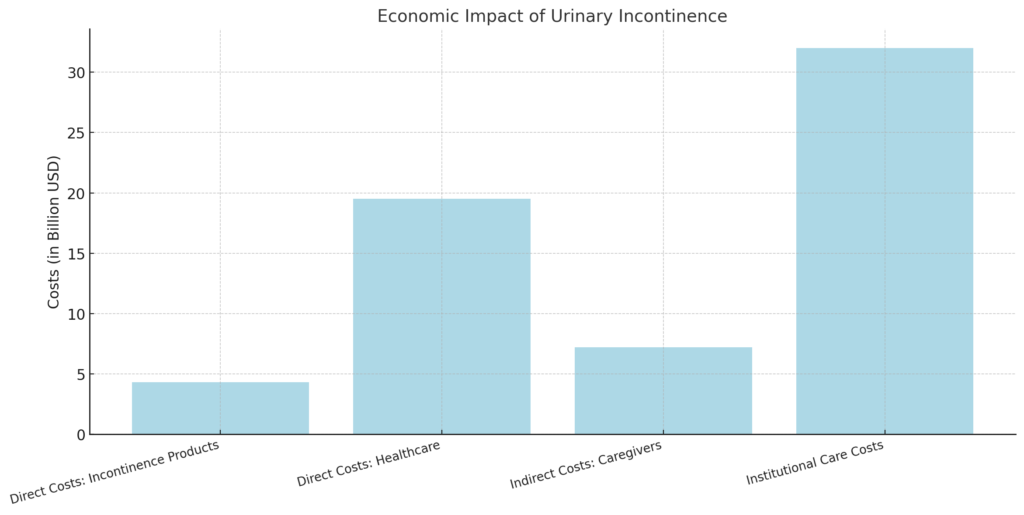
The bar chart illustrates the economic impact of urinary incontinence, highlighting the costs associated with different categories:
- Direct Costs: Incontinence Products – $4.33 billion.
- Direct Costs: Healthcare – $17 billion (includes treatments, UTIs, and other medical needs).
- Indirect Costs: Caregivers – $6 billion (includes lost workdays and out-of-pocket expenses). Source: Researchgate
- Institutional Care Costs – $23.6 billion (for seniors requiring specialized care in facilities). Source: 1, 2.
4. Quality of Life Metrics
Urinary incontinence (UI) significantly affects the quality of life for seniors and imposes emotional and financial strains on caregivers. Key statistics and insights from reputable sources include:
1. Impact on Seniors’ Quality of Life
- Diminished Quality of Life: UI can lead to social isolation and loneliness, which are linked to increased risks of anxiety, depression, cognitive decline, and Alzheimer’s disease in older adults.
- Psychological Toll: Seniors experiencing frequent nighttime awakenings due to UI may suffer from a lower quality of life and higher risks of depression. AARP
2. Impact on Caregivers
- Emotional Strain: Almost half of caregivers who put in long hours say they feel highly stressed, showing just how tough caregiving can be emotionally. AARP Press
- Financial Strain: Family caregivers often struggle with money, with almost 80% spending an average of $7,200 a year out of their own pockets. These expenses can take a toll on their financial stability. AARP
- Health Challenges: Caregivers frequently experience physical health issues due to the demands of caregiving, with many reporting health conditions that affect their daily lives. AARP Blog
These findings show how much urinary incontinence affects seniors and their caregivers, highlighting the need for better support to handle the physical, emotional, and financial challenges.
5. Future Trends and Solutions
Urinary incontinence (UI) in seniors is becoming a bigger issue, but new trends show challenges and improvements ahead. The focus is on new technology, better healthcare solutions, and changes in the aging population.
1. Technological Advancements
- Wearable Technology and Smart Devices: Adding smart sensors to incontinence products makes real-time monitoring and management simpler. This helps improve comfort and makes care more effective.
- Eco-friendly Solutions: The global market for superabsorbent polymers, used in incontinence products, is expected to reach $10.58 billion by 2027, growing 3.9% annually. The demand for eco-friendly and biodegradable materials drives this growth. Frost
2. Healthcare Developments
- Non-Invasive Treatments: More attention is paid to non-surgical options like pelvic floor therapy and medications to manage UI. These approaches help people avoid surgery and get better results.
- Education and Awareness: Public health campaigns are tackling the stigma around UI. Raising awareness encourages people to get help sooner, leading to better management and an improved quality of life.
3. Projections
- Aging Population: As more people live past 65, UI cases will likely increase. This means healthcare services and support systems must meet the demand.
- Healthcare Spending: The telehealth market, including tools to monitor UI, is set to jump from $87.9 billion in 2023 to $285.7 billion by 2028, growing 23.2% a year. This shows the growing focus on digital health tools to manage chronic issues for seniors. Frost Store
These trends highlight the need for ongoing innovation and investment in UI management to meet seniors’ changing needs.
Conclusion
Urinary incontinence isn’t just a health issue—it’s a quality-of-life issue.
From the staggering statistics to the emotional and financial toll, it’s clear that seniors, caregivers, and healthcare systems all feel the impact. But with innovative solutions on the horizon and growing awareness, we have the tools to make a real difference.
Now, it’s your turn.
What’s your experience with incontinence—personally or professionally? How can we break the stigma and bring this issue into the spotlight?
Let’s start a conversation that drives change.


